
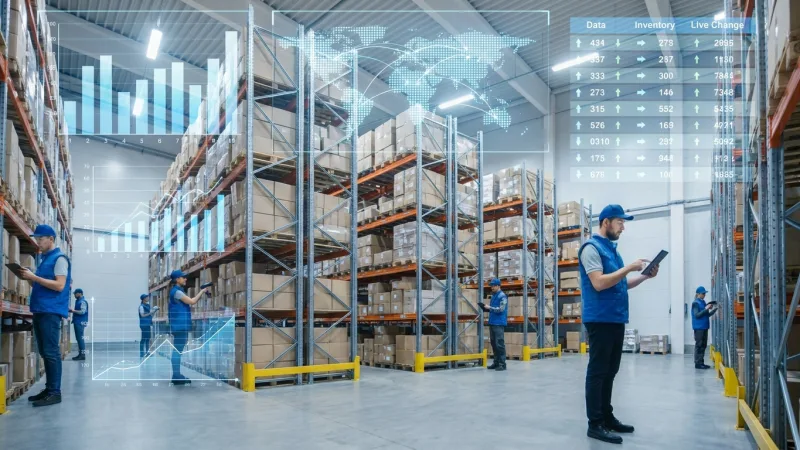
While 73% of B2B buyers are now millennials demanding Amazon-like experiences, 89% of traditional distributors still rely on manual processes that take 3x longer and cost 40% more than automated alternatives. This mismatch highlights the urgency for B2B leaders to adapt to emerging ecommerce trends. In this article, you’ll discover a 5-step framework to transition from outdated models to intelligent, automated distribution systems. We’ll cover everything from mobile-first strategies to AI-powered customer intelligence and integration system. Let’s dive into the future of B2B e-commerce.
The $7.7 Trillion Shift: Why Traditional B2B Models Are Breaking Down in 2026
B2B e-commerce is projected to reach a staggering $7.7 trillion by 2026. This explosive growth reflects a fundamental shift in buyer demographics and behaviors. With 73% of B2B buyers now being millennials, the demand for smooth digital purchasing experiences is unprecedented. The average B2B buyer journey involves 11.2 touchpoints, emphasizing the complexity of the purchasing process compared to traditional models.
The traditional models are struggling to keep up. Shockingly, many distributors are still operating on outdated manual systems, resulting in inefficiencies and higher costs. The contrast between the market potential and current operational practices presents a significant opportunity for change.
| Year | Market Size (Trillion USD) |
| 2022 | 5.2 |
| 2026 | 7.7 |
Data-Driven Distribution: The 5-Layer Framework Replacing Manual Wholesale Operations
B2B leaders are implementing a 5-layer framework to transition from manual wholesaling to data-driven distribution. This framework includes AI-powered inventory prediction, dynamic pricing algorithms, automated reorder systems, real-time supplier integration, and customer behavior analytics. Each layer addresses a specific operational challenge, creating a smooth end-to-end distribution system.
AI-powered inventory prediction enables companies to decrease stockouts by 30%, while dynamic pricing algorithms ensure competitiveness and adaptability. Automated reorder systems, integrated with suppliers in real-time, cut lead times by half. These advancements are setting new standards in efficiency and customer satisfaction.
| Layer | Implementation Checklist |
| AI-powered Inventory | Integrate machine learning tools, set up alert systems, train staff on data analysis |
| Dynamic Pricing | Develop pricing algorithms, monitor competitor prices, adjust based on demand patterns |
| Automated Reorder | Setup vendor portals, automate purchase orders, implement approval workflows |
| Supplier Integration | Use real-time data feeds, establish direct communication channels, synchronize operational data |
| Customer Analytics | Deploy customer journey mapping tools, analyze segmentation data, tailor marketing efforts |
Mobile-First B2B: How 68% of B2B Purchases Now Start on Mobile Devices
Mobile commerce is no longer a minor player in B2B, 68% of B2B purchases now begin on mobile devices. In 2025 alone, mobile B2B commerce grew by 41%, underscoring a significant shift in buyer habits. This trend demands that B2B companies prioritize mobile improve.
Adoption of progressive web apps and mobile payment integration have become critical. Even offline-capable mobile ordering is now important, allowing sales to continue smooth across all environments. Companies failing to adapt may find themselves lagging behind their more mobile-savvy competitors.
| Device Type | Conversion Rate (%) |
| Mobile | 2.9 |
| Desktop | 3.6 |
AI-Powered Customer Intelligence: Predicting B2B Buyer Behavior Before They Know It
Imagine knowing what your buyers want before they do. AI-powered customer intelligence makes this possible. With predictive lead scoring reaching accuracy rates of 80%, AI is change how B2B companies engage with their prospects.
Automated customer segmentation and behavioral trigger systems allow for personalized interactions, increasing conversion rates by up to 25%. These technologies not only predict buyer behavior but also improve the overall purchasing experience, build long-term loyalty.
| Stage | Maturity Level |
| Basic | Manual data collection, basic analytics |
| Intermediate | Automated data processing, predictive modeling |
| Advanced | Real-time analytics, AI-driven decision-making |
Subscription Commerce Revolution: Why 34% of B2B Companies Are Moving to Recurring Revenue
There’s a revolution happening in B2B commerce: the shift from transactional sales to subscription models. Currently, 34% of B2B companies have adopted subscription models, driven by the predictability and increased customer lifetime value they offer.
Subscription models allow for automated billing and fulfillment, simplify operations and improving cash flow consistency. As more companies make the transition, the competitive market of B2B commerce is being irrevocably altered.
| Revenue Model | Revenue Predictability |
| Traditional | Variable, transaction-based |
| Subscription | Consistent, recurring |
Integration system: Building the Connected Commerce Infrastructure of 2026
Building a connected commerce infrastructure is important for modern B2B operations. API-first architecture enables smooth integration with ERP systems and third-party marketplaces, help real-time data synchronization and operational efficiency.
This integration system supports a cohesive technology stack that can reduce operational costs by up to 25% while improving scalability. Choosing the right vendors and technologies is critical in building this system effectively.
| Criteria | Considerations |
| Compatibility | ERP system integration, API availability |
| Scalability | Support for future growth, modular components |
| Support | Vendor support services, community resources |
Sustainability and Transparency: How ESG Requirements Are Reshaping B2B Supply Chains
Sustainability isn’t just a buzzword, it’s a competitive differentiator in B2B. Companies are increasingly tracking carbon footprints and using supplier sustainability scorecards to ensure transparency. This shift towards sustainability is not optional; it’s becoming a requirement.
Transparent supply chain reporting and circular economy practices are becoming standard. By 2026, companies that fail to adopt these practices risk not only regulatory penalties but also losing favor with increasingly eco-conscious buyers.
| Metric | Tracking Method |
| Carbon Footprint | Emissions data collection, third-party audits |
| Supplier Sustainability | Scorecards, compliance monitoring |
| Supply Chain Transparency | End-to-end visibility, blockchain technologies |
What are B2B ecommerce trends? B2B ecommerce trends are patterns and shifts in how businesses buy and sell goods and services online. These trends include automation, AI integration, mobile-first approaches, and sustainability. Understanding these trends helps businesses adapt and stay competitive in the rapidly evolving digital marketplace. How is B2B ecommerce growing? B2B ecommerce is growing rapidly, projected to reach $7.7 trillion by 2026. This growth is driven by digital change, changing buyer demographics, and the increasing adoption of mobile and AI technologies. Businesses are adapting by automating processes and improve online platforms to meet evolving customer expectations. What’s driving the shift from traditional wholesale to digital distribution? The shift is driven by demands for efficiency, cost reduction, and improve customer experiences. Digital distribution offers real-time data insights, automated inventory and ordering systems, and predictive analytics. These advantages help businesses meet customer expectations and improve competitiveness in the market. How important is mobile improve for B2B ecommerce in 2026? Mobile improve is important as 68% of B2B purchases begin on mobile devices. Companies must ensure their platforms are mobile-friendly to capture and convert these mobile-first customers. This involves adopting progressive web apps, integrating mobile payments, and enabling offline functionality to improve user experience. What role does AI play in modern B2B ecommerce? AI plays a pivotal role in modern B2B ecommerce by improving customer intelligence, automating processes, and improving decision-making. It aids in predictive lead scoring, customer segmentation, and product recommendations. Implementing AI improves efficiency, personalization, and competitive advantage for businesses.
As B2B e-commerce continues to evolve, staying ahead of the trends is non-negotiable. Integrate these insights into your strategy today, and you’ll be well-positioned for success in 2026 and beyond.