
73% of B2B companies considering headless commerce can’t calculate if it will actually increase their revenue, here’s the ROI framework they’re missing. B2B organizations often face pressure to innovate their digital infrastructure. Yet, many hesitate at the prospect of headless commerce due to uncertainty about returns. In this guide, we’ll unpack the intricacies of headless commerce, providing you with a detailed ROI framework to confidently make this important decision. Prepare to walk away with a complete understanding and practical strategies for implementation.
What Is Headless Commerce? The Complete B2B Architecture Breakdown
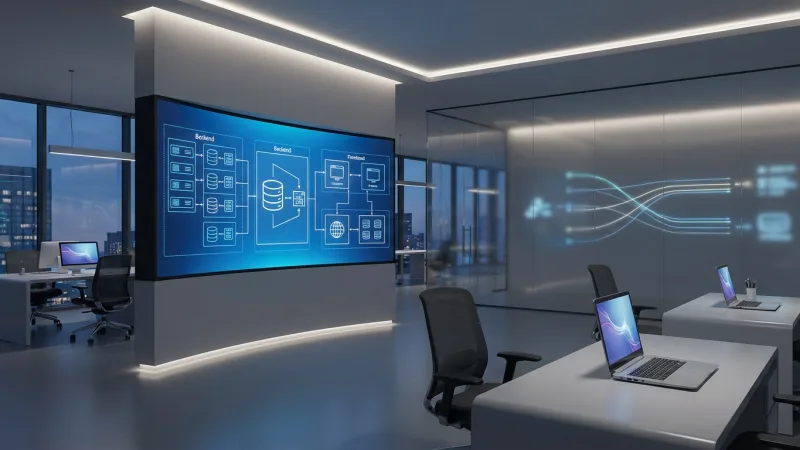
Headless commerce explained simply means separating the frontend presentation layer from the backend commerce functionalities. In a B2B context, this API-first architecture help businesses to deliver more customized and agile user experiences. Unlike traditional monolithic systems, headless commerce allows you to innovate independently, deploying changes to your frontend without disrupting backend operations.
Imagine your team wants to launch a new customer portal. With headless commerce, you can implement this change swiftly without overhauling the entire backend. This separation is important in B2B, where the buying process is often complex and customer expectations are rising.
| Criteria | Traditional Commerce | Headless Commerce | Composable Commerce |
| Scalability | Limited | High | Very High |
| Customization | Minimal | Extensive | Extensive |
| Time to Market | Slow | Moderate | Fast |
Consider a B2B company like a machinery supplier handling 5,000 transactions monthly. By adopting headless commerce, they achieved a 30% reduction in site load time, improving customer satisfaction and reducing bounce rates.
The True Cost of B2B Headless Commerce Implementation (2024 Analysis)
Before diving into headless commerce, understanding the cost structure is important. Implementation is not just an upfront expense but a series of ongoing investments. Development costs typically range from $100,000 to $500,000 depending on complexity. These include API creation, frontend build-out, and integration with existing systems.
Maintenance is another layer of cost, often between $10,000 to $50,000 annually, covering support and system updates. Integration complexities, such as CRM and ERP systems, can add another $50,000 to your budget.
| Cost Element | Estimated Cost |
| Development | $100,000 – $500,000 |
| Maintenance | $10,000 – $50,000/year |
| Integration | $50,000 |
Time-to-market is another critical factor. A full implementation might take 6-12 months. For example, a global electronics distributor set a six-month timeline, but due to integration challenges, it extended to nine months. It’s important to factor in these potential delays during planning.
B2B Headless Commerce ROI Calculator: When It Pays Off
For B2B leaders, the question isn’t just about cost, but when and how headless commerce will pay off. Here’s a framework to calculate your ROI effectively. Start by analyzing revenue impact metrics such as increased conversion rates. A study showed a 20% conversion boost post-implementation for companies adding advanced personalization features.
Operational efficiencies, like reduced development cycles, can lead to savings of $40,000 annually. On the customer experience front, faster load times can significantly improve user satisfaction, contributing to higher retention rates.
Let’s consider market expansion. A B2B business entering new geographical markets can use headless commerce for localized content faster than traditional setups, cutting time-to-market by 50%.
The break-even analysis template can be your guiding star. If your projected increase in annual revenue is $200,000, and total headless investment is $300,000, your break-even point hovers around 1.5 years, provided you maintain growth and efficiency improvements.
Headless vs Traditional B2B Commerce: Performance Benchmarks
It’s important to weigh headless commerce against traditional systems in terms of performance. Data shows headless systems can improve page load speeds by up to 50%. In a B2B scenario where product catalogs can be vast, this speed translates directly to improve customer experiences and improved conversion rates.
| Performance Metric | Traditional Commerce | Headless Commerce |
| Page Load Speed | 3.5s | 1.8s |
| Conversion Rate | 2.3% | 3.6% |
| Mobile Performance | Average | High |
Consider the case of a B2B office supplies vendor who migrated to headless commerce. They reported a 25% increase in mobile sales due to significant performance improvements on mobile devices. Also, scalability metrics improve drastically with headless; handling peak traffic smooth becomes achievable with fewer infrastructure costs.
B2B Headless Implementation Roadmap: 90-Day Action Plan
Once you’ve decided on headless commerce, what’s next? A clear 90-day action plan can simplify the transition. Start with a pre-implementation assessment to evaluate your current infrastructure and identify gaps. Selecting the right technology stack is critical, ensure compatibility with existing systems and future scalability.
Migration strategy comes next. Define data migration processes and prioritize critical integrations. Testing protocols should cover security, load capacity, and user interface efficacy.
| Action | Timeline |
| Assessment | 0-15 Days |
| Technology Selection | 16-30 Days |
| Migration Plan | 31-60 Days |
| Testing | 61-90 Days |
For risk mitigation, develop contingency plans for potential disruptions and allocate resources for unexpected challenges. This checklist ensures nothing slips through the cracks, keeping your implementation on track and within budget.
Headless Commerce Pitfalls: What 73% of B2B Companies Get Wrong
Even with thorough planning, implementation pitfalls are common. The most frequent mistake is underestimating integration challenges. Specialized B2B systems like ERP and CRM require precise linking to ensure a smooth data flow.
Resource allocation often poses another challenge. Companies sometimes fail to dedicate enough personnel to manage the transition, leading to delays and cost overruns. Change management is critical in overcoming internal resistance, which can stall the adoption process.
To mitigate these risks, use a risk assessment framework to identify potential failure points early. Study failure case studies to learn from past mistakes, and adhere to a prevention checklist to safeguard your project.
Future-Proofing Your B2B Commerce: Headless vs Composable Strategies
Looking forward, how does headless commerce align with the future of B2B commerce? Technology trends indicate a shift towards composable commerce, where businesses can select and combine best-of-breed components.
Headless commerce lays the groundwork for this transition by establishing a modular architecture. As market needs evolve, your business can adapt without reengineering the entire system, thus protecting your investment.
| Strategy | Future Scalability | Adaptability |
| Headless Commerce | High | Moderate |
| Composable Commerce | Very High | High |
For strategic planning, use a future readiness assessment to gauge your current and potential capabilities. This strategic planning framework ensures your B2B platform is strong enough to withstand technological shifts and market variances.
What is headless commerce? Headless commerce is the decoupling of the frontend user interface from the backend commerce system, allowing for more flexibility in delivering customized user experiences. This approach provides businesses with the agility to change customer interfaces without altering backend processes, improving digital change capabilities. Should B2B use headless commerce? Yes, B2B should consider headless commerce for its flexibility, scalability, and ability to integrate complex systems like CRM and ERP. By improve the customer experience and accelerating market responsiveness, headless commerce aligns well with B2B operational demands and growth strategies. What’s the difference between headless and composable commerce? While both separate frontend from backend, headless commerce focuses on flexibility in design and delivery. Composable commerce goes further by allowing businesses to choose and integrate best-of-breed components for various functionalities, offering greater adaptability and future-proofing. How much does B2B headless commerce implementation cost? Implementation costs for B2B headless commerce can range from $100,000 to $500,000. This includes development, integration, and ongoing maintenance expenses. Costs vary based on the complexity, scale, and specific business requirements of the implementation. How long does headless commerce implementation take for B2B? The implementation of headless commerce for B2B typically takes between 6-12 months. This timeline accounts for development, integration, testing, and change management processes necessary to ensure a smooth transition and system robustness.
Start evaluating your B2B commerce strategy today. Analyze your current infrastructure challenges, project potential gains, and weigh them against costs to decide if headless commerce is right for your business. Consider exploring our other pieces on B2B marketing strategies and technologies to integrate these insights further. The future of B2B commerce is not just about keeping up but staying ahead with systems designed for tomorrow’s challenges.